


01
Why StarDeck Labs
When I got back into astrophotography, the gear was amazing but scattered: every brand had its own app, its own cables, its own habits.
The software I used had been designed for a PC sitting next to the scope. Remote control, Alpaca and multi-scope setups came later, and you can tell.
I wanted to see what software built for those uses from day one would look like, along with open hardware that speaks Alpaca.
02
The people behind StarDeck Labs
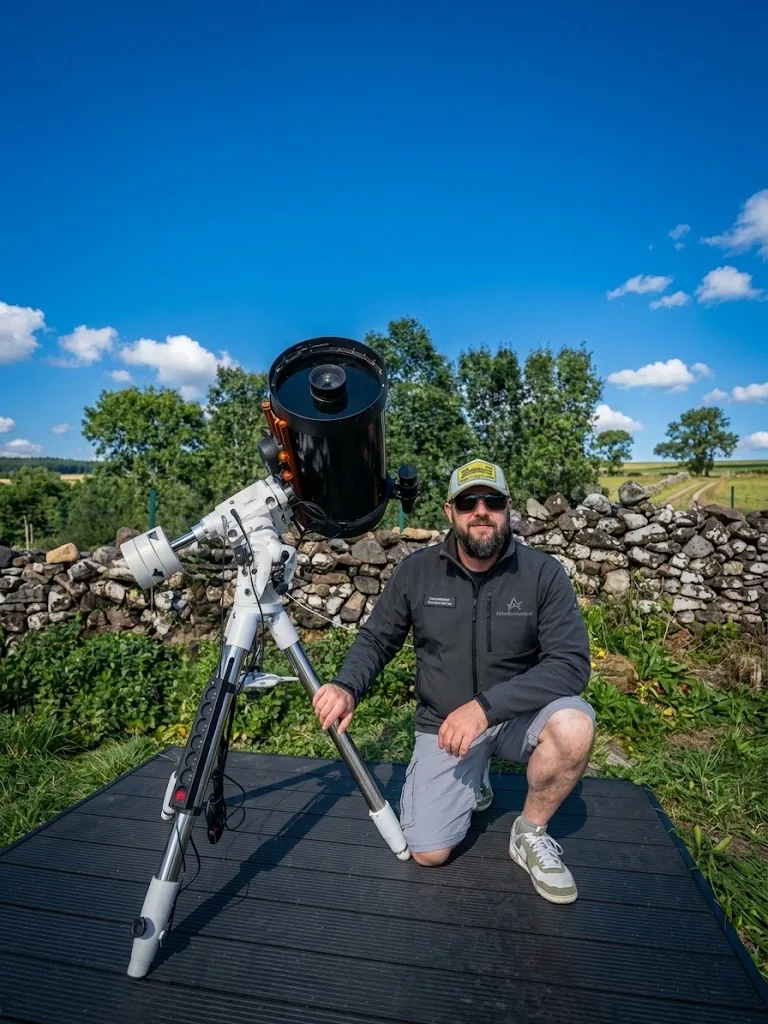
I’m Vincent Fillion. I’m 48, I’ve been an engineer for 25 years and an amateur astronomer for almost 40.
Mechanical engineering, embedded systems, AI, VFX pipelines, software development: I’ve worked across all of them over the years.
It all started with a small first refractor, a gift from a relative. Active observing came with my driving licence. Then came the 2003 opposition of Mars. I was a club president for a short while. Then I took a break of several years because of work trips and travel.
When I came back, almost everything had changed: CMOS cameras, mounts you control over Wi-Fi, a Raspberry Pi at the foot of the scope. I wanted to build my own tools.
My wife works with me. She’s the one who turns drawings into real objects.
Vincent
Software · firmware
- Designs the software
- Writes the firmware
- Defines the hardware and software ranges
Mechanical design and production
From paper to object
- Technical drawing and admin
- Production and 3D-printing queues
- Assembly and testing
03
Our journey
- 4 yearsof prototypes in our spare time
- 1 yearfull time
- 100 %self-funded
We spent four years on prototypes in our spare time. A year ago we decided to go full time.
We pay for everything ourselves for now. The goal is for StarDeck Labs to support the two of us.
04
Our principles
01
Openness
Our hardware is fully Open Hardware. It is built on Alpaca. It works with NINA, KStars/Ekos and any compatible software. We publish the plans and 3D-print files, the electronic schematics and the firmware. Anyone can build it all and adapt it to their needs. For those who prefer to buy, we offer spare parts, circuit boards and complete modules, assembled and tested.
- Plans
- 3D files
- Schematics
- Firmware
02
The field first
Every accessory has to be usable at night, with gloves on, in cold and damp. None of them forces you to use our software.
03
A rebuild, not a patch
Our software handles remote control and multiple scopes from day one, runs on Windows, macOS, Linux and ARM, and fits in with what you already use.
04
How we price things
Free software stays free: no paywall, no reserved features. Community support is voluntary, through Patreon, Tipeee or direct donation. The hardware is funded by selling parts and complete systems. Paid software is a one-time purchase. Vör gets lifetime updates. Heimdall includes one year of updates, renewable for €29 a year if you want. You can also use them through a Patreon subscription.
05
Our observatory
We don’t sell anything we don’t use ourselves. So we’re building an observatory dedicated to testing our products.
- Structure
- Raised, timber
- Roof
- Roll-off, motorised
- Area
- ≈ 10 m²
- Piers
- EQ6 · EQ8
- Opening
- Autumn/winter 2026
06
What’s next
We present our projects one step at a time.
From autumn 2026 to early 2027
Himinn and Bifröst
The two free programs come out first.
H1 2027
Heimdall beta
Open to volunteers. Beta testers get a free lifetime copy.
During 2027
Focuser, monitoring box, collimation camera
The first hardware accessories.
01 · The observatory
An observatory built for testing.
We are building an observatory dedicated to testing our products. It houses the fixed mounts on piers. Test nights follow one another with no setup or teardown.
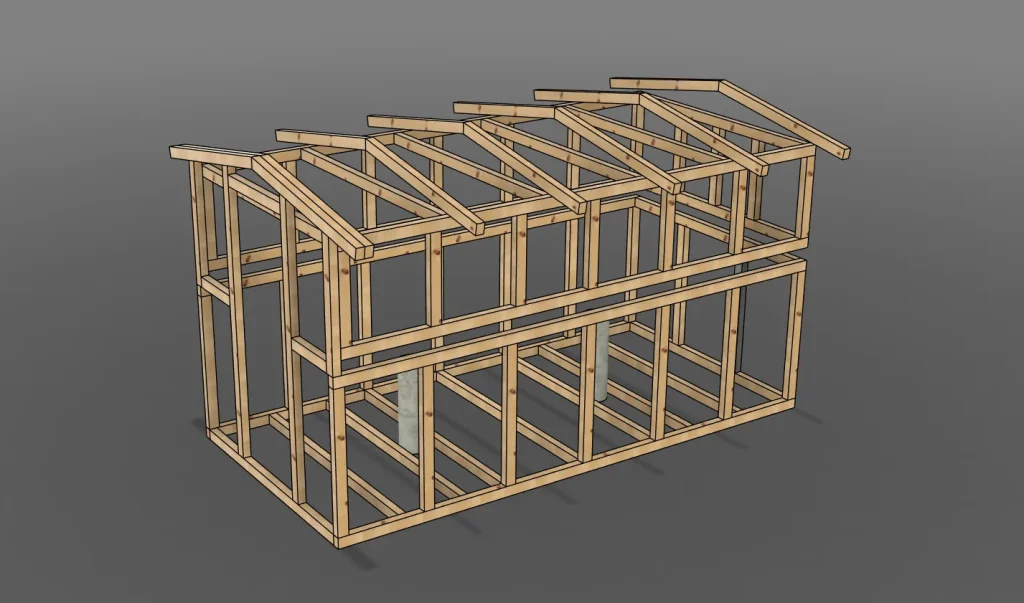
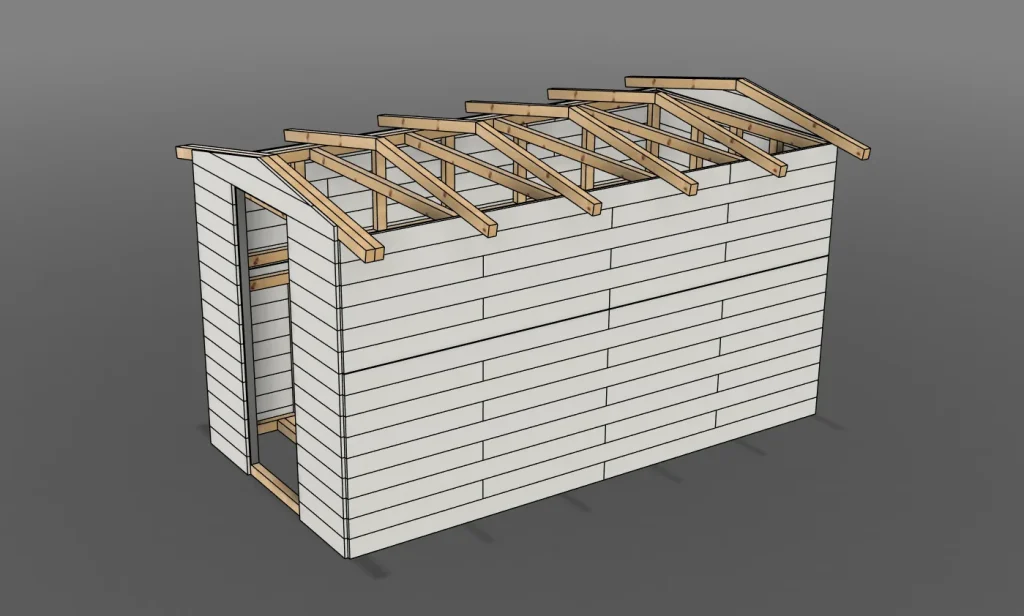
- Structure
- Raised, timber
- Roof
- Roll-off, motorised
- Area
- ≈ 10 m²
- Piers
- EQ6 · EQ8
- Opening
- Autumn/winter 2026
02
Mounts
Two heavy mounts. The AZ-EQ6 Pro is the easier one to move.
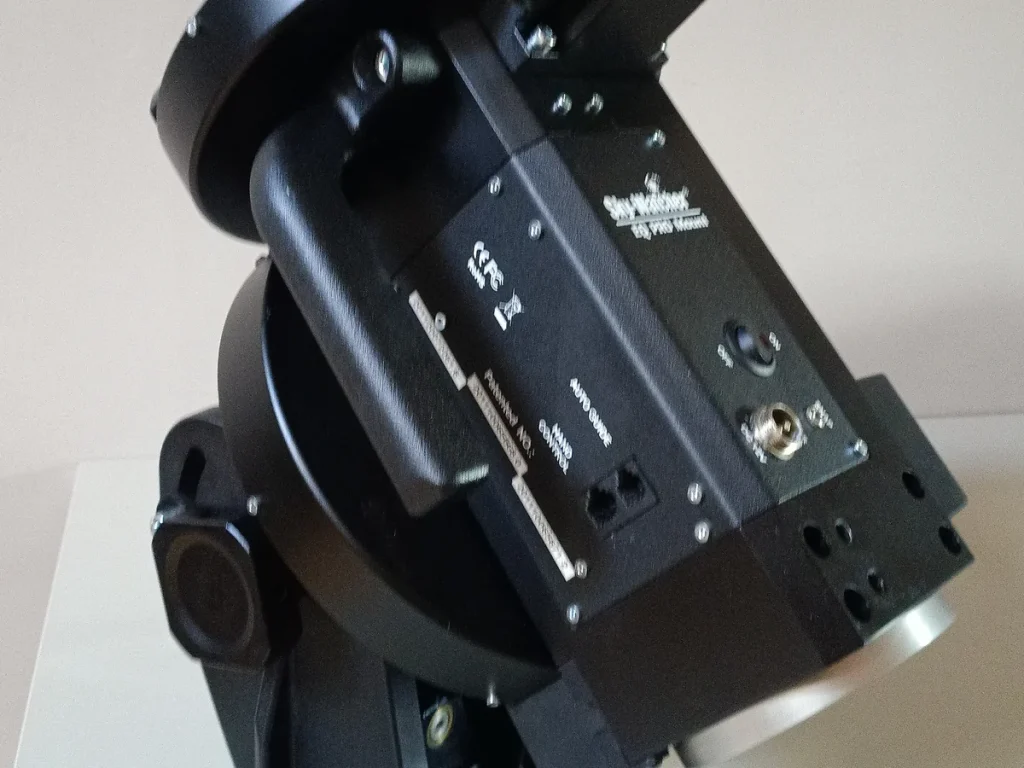
SkyWatcher AZ-EQ6 Pro
Heavy mount, the more transportable of the two.
SkyWatcher EQ8 Pro
Older generation, no USB on the mount.
SynScan V3 3.37 hand controller · Hitecastro EQDIR cable with EQMod
PoleMaster
Polar alignment.
03
Optics
Four instruments for deep sky, wide field and planetary.
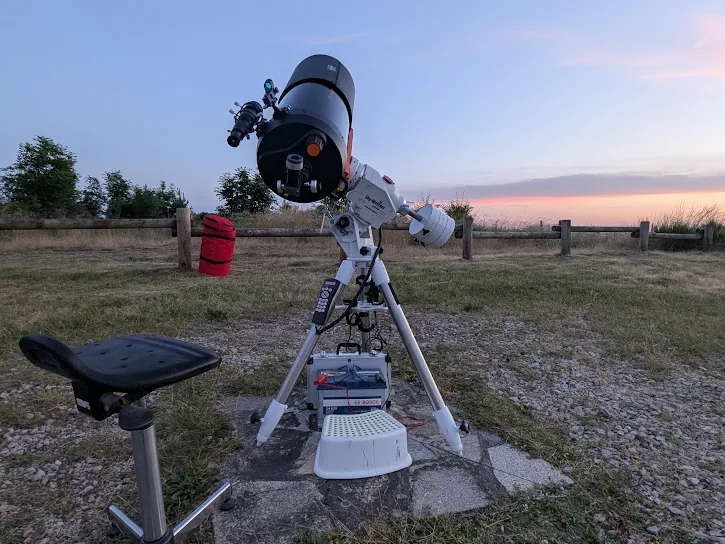
Apertura CarbonStar 200
Deep sky.
200 mm · f/4 · 800 mm · GPU ×1 corrector
TS-Optics 94 EDPH
Apochromatic refractor.
94 mm · f/5.5 · APO
SharpStar 94 EDPH f/4.4
Wide field.
94 mm · f/4.4 · ≈ 414 mm
Celestron C11
Planetary, and deep sky with the AF6 II.
Baader VIP 2× Barlow · ZWO ADC · TS SC Crayford · AF6 II
04
Cameras
A mono camera for deep sky, a colour one, a planetary one and one for guiding.
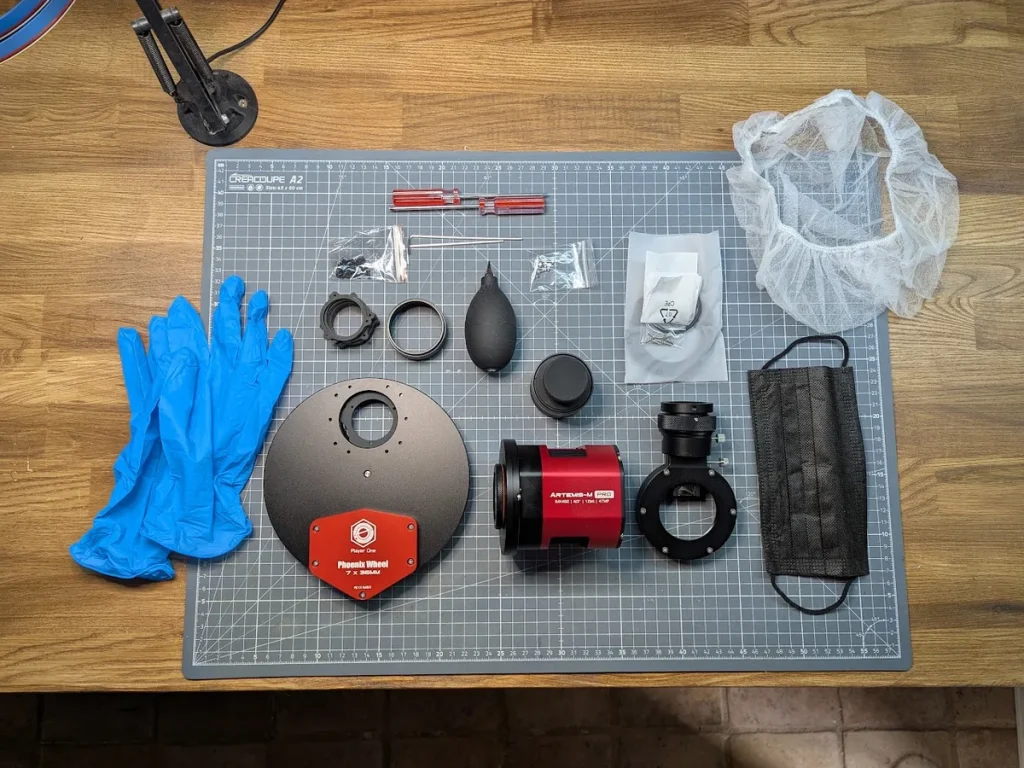
Player One Artemis-M Pro
Main
Main deep-sky camera.
Player One Mars-C
Planetary.
ZWO ASI294MC Pro
Colour camera (OSC).
ZWO ASI120MINI
Guiding.
05
Wheels and filters
Two 7-position wheels and a full LRGB and narrowband set in 36 mm.
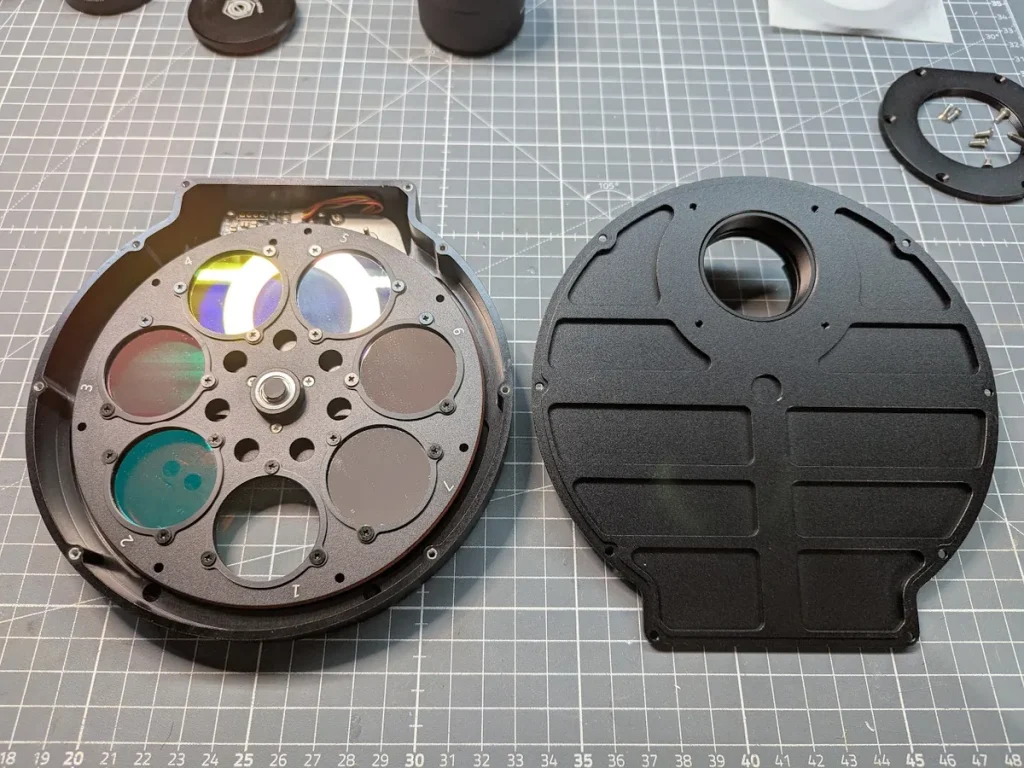
Player One filter wheel
7 positions, 36 mm filters.
ZWO EFW filter wheel
7 positions.
Baader LRGB CMOS
Colour filters.
36 mm
Baader 6.5 nm CMOS
Narrowband.
Hα · OIII · SII · 36 mm
06
Guiding and focus
Off-axis guiding and two motorised focusers.
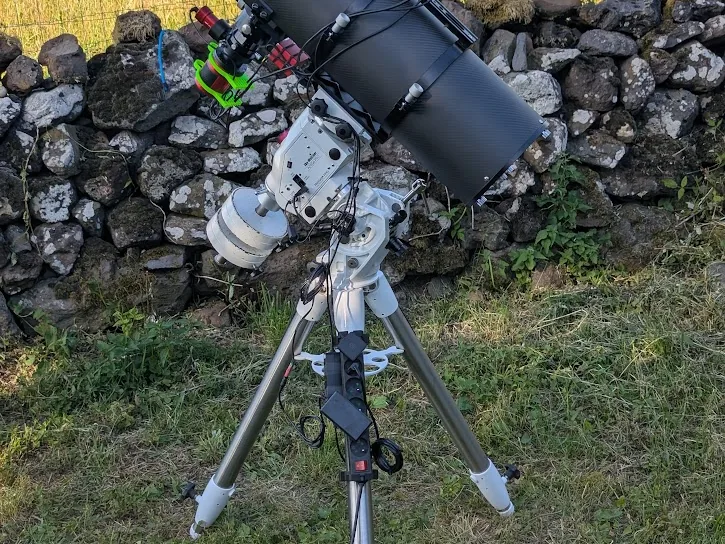
ZWO OAG Standard
Off-axis guider.
Player One OAG Max
Off-axis guider.
ZWO EAF focuser
Motorised focusing.
StarDeck Star Focuser 17 focuser
Home-made
Moonlite-compatible.
07
Computing
Raspberry Pis at the foot of the mounts, our development PCs and a Mac for testing.
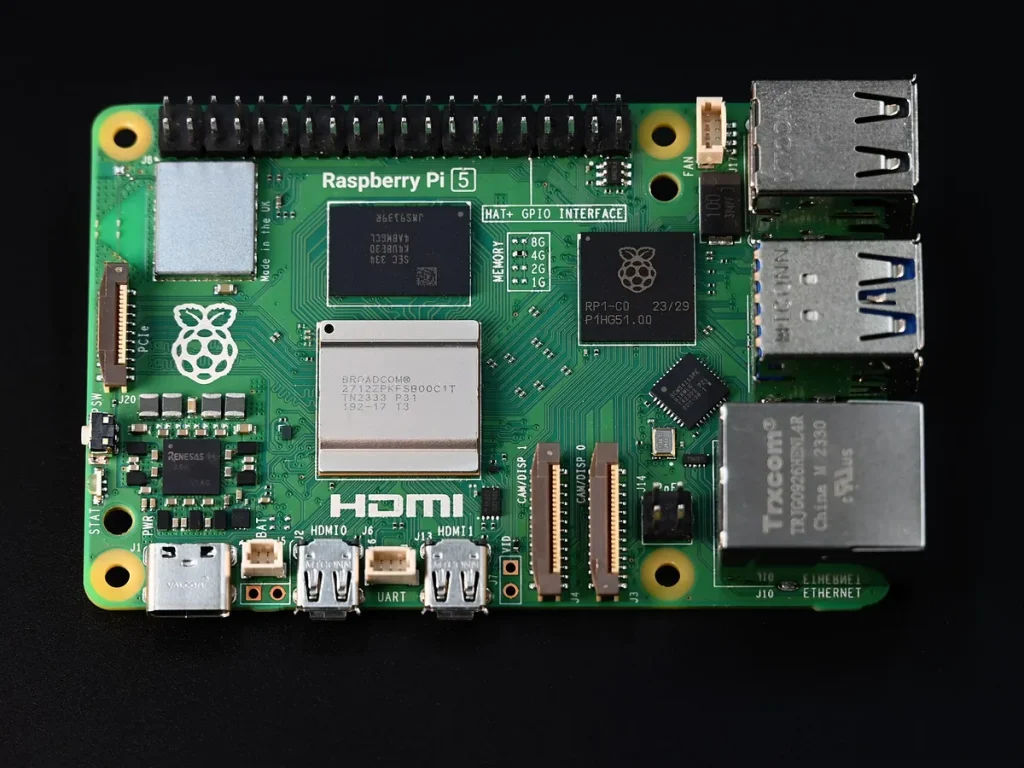
Raspberry Pi 4 and Pi 5
Several boards, 2 to 8 GB. Control at the telescope.
Astroberry v3 · KStars/Ekos · storage on NAS
Windows PC · Intel
Development and work PC. Also used for processing.
i9-14900K · RTX 4090 · 64 GB
Windows PC · AMD
Development and work PC.
Ryzen 9 · RTX 3090 · 64 GB
Windows laptop
Field and testing.
Core i5 · 16 GB · GTX 1050
MacBook Neo
Mac testing, and control when we need to be right at the telescope.
SynScan Pro
Mount control.
01
What is open hardware?
You probably know open source in software: a program whose code is public, that anyone can read, modify and share. Open hardware applies exactly the same idea to physical objects.
In practice, an open hardware product is an object whose design information is all published: plans, electronic schematics, manufacturing files, embedded code. With these documents, anyone can reproduce the object, repair it, adapt it to their own gear or use it as a starting point for something else.
Arduino, Raspberry Pi (in part), RepRap 3D printers and many maker community projects are built on this philosophy. A lot of the kit we use every day in the workshop exists because others chose to share.
02
Why at StarDeck Labs?
Amateur astronomy involves a lot of tinkering. We adjust, adapt and print parts, and plenty of you already build your own accessories.
Yet most commercial boxes are closed: in-house protocol, an app that vanishes when the product is discontinued. When something breaks, you’re stuck.
The protocols themselves are open (ASCOM, INDI, Alpaca), so it makes sense for the hardware to be open too.
Every module is documented so that anyone can reproduce it.
There’s a practical reason as well: if StarDeck Labs ever stops, you’ll still have the files to reprint a case, remake a board or keep evolving the firmware.
With just the two of us, we need your feedback to move forward.
03
What we publish
Here’s what we publish for every module.
3D-print files
STL · 3MF · sources
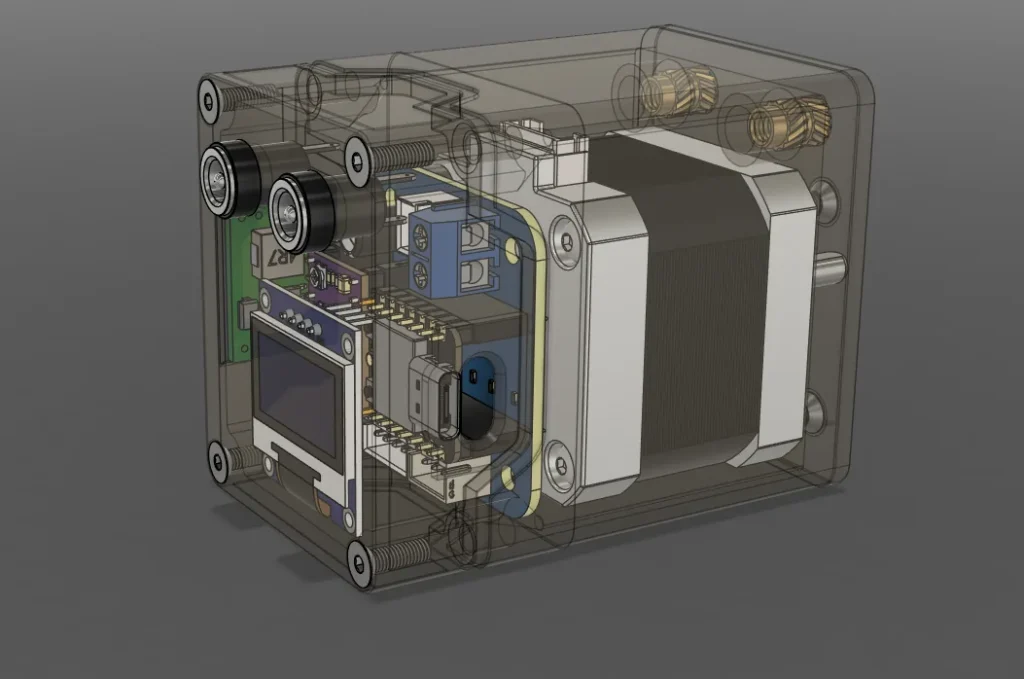
The models of our cases, brackets, adapters and mechanical parts are published as STL and 3MF, ready for the slicer. Every part is designed to print without critical supports, in PETG-CF, with standard hardware and heat-set inserts. The design source files are shared too, so you can adapt a part to your mount or tube without starting from scratch.
Firmware
C++ · PlatformIO
The embedded code of every module, written in C++ with PlatformIO, is public, commented and buildable. You can read it to understand exactly what your device does, modify it, add a feature or port it to another board.
Pinouts
Pins · connectors
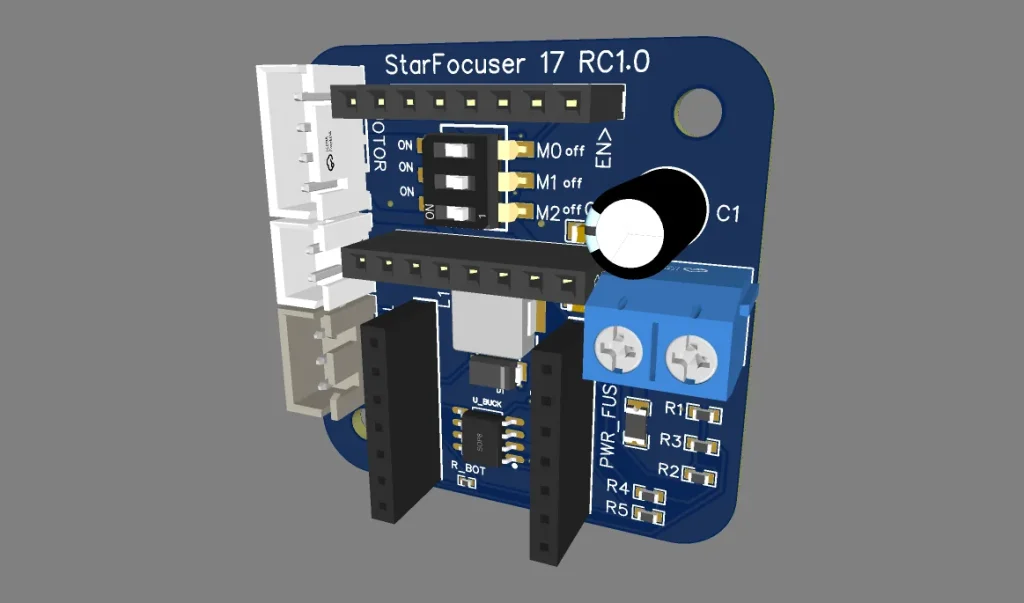
For every module, the exact mapping between microcontroller pins and components (motors, sensors, outputs, connectors) is documented. No more guessing the wiring: you know what is plugged in where, and why.
Electronics
Schematics · Gerber
The electronic schematics are published, along with the manufacturing files for our circuit boards in Gerber format. It is the industry standard: you can send the files as they are to the PCB maker of your choice and receive your own boards a few days later, identical to ours.
Documentation
BOMs · guides
Bills of materials, assembly guides and technical notes come with the files, so that reproduction is within reach of a motivated amateur, not just an engineer.
04
The licence
MIT LICENSE · GITHUB
Everything is published on GitHub under the MIT licence, one of the most permissive there is. In plain terms: you can use, copy, modify and even redistribute our files, including commercially, as long as you keep the licence notice and credit the project.
05
What if I’d rather buy?
Of course, and we expect most of you will. Just as most Linux users don’t compile their kernel, most astronomers won’t have their boards made themselves. They want a module that works, tested under the sky, delivered ready to use.
You get a finished product, and you’re still free to open it, fix it or modify it.
In between, there is also a middle way: we sell the components individually.
- Printed case only
- Bare circuit board
- Laser-cut LGP panel
- Pre-wired cable
- Preconfigured ESP32 board
You build what you like and only buy what you need.
06
Get involved
There are a few ways to get involved:
- build a module from our files and tell us what you did with it,
- report a bug or suggest an improvement directly on GitHub,
- adapt a part to your gear and send us the variant,
- share your field feedback with the community.
If you build one, show us. It always makes our day.
04 · FAQ
Frequently asked questions
New to StarDeck? Here are answers to the questions people ask us most.
A question that isn't here? Write to us →
A small French company making astrophotography software and Open Hardware gear. The apps share the same engine and work together, but each one also works on its own.
Heimdall, the complete station for deep-sky and planetary imaging. Himinn, the 3D sky map for planning your targets. Vör, the FITS viewer. Mio, live collimation. Reïkis, the planetary workshop.
With whichever matches what you need. Himinn is free: nothing to plug in, you just look at the sky. Vör is sold on its own, Mio will follow. Heimdall brings everything together and includes Himinn, Vör and Mio. Nobody has to buy the whole suite.
Imagers who are already equipped, or getting there: mixed gear, several brands, a backyard, a club or a hobbyist observatory. You should be able to use it from the first night, and go further when you need to.
Heimdall runs on Windows, macOS, Linux and Raspberry Pi, all on equal footing. The first programs released run on Windows.
No. Heimdall drives mixed equipment from several brands, with no vendor lock-in. The interfaces never talk to the hardware directly: an engine next to the telescope does that, and the screens (desktop, tablet) only give it commands.
No, not to point, plate-solve or shoot: plate solving runs offline. Buying a program goes through the website, with a one-time online activation. After that, the program no longer needs internet. With Patreon, a check takes place once a month.
Himinn is free. The other apps are bought on the website with a perpetual licence, or used through a Patreon subscription.
Two per licence, typically your home PC and the machine at the telescope. A tablet doesn’t count as an installation: it is just a screen for the engine, served over your local network.
A program you bought stays usable, on the versions released during your update period. With Patreon, the application stops when the subscription stops, never in the middle of a session.
Each program updates itself. At install time you choose automatic or on demand, and you can change your mind in the preferences. The program checks at most once a day. It never installs an update while it is working.
A board delivered with the Heimdall engine and its system, to sit next to your telescope. Its licence is already activated and tied to the board, and it doesn’t count toward your two installations. The Box receives updates and checks its licence.
Yes. StarDeck Labs designs astronomy hardware as Open Hardware: plans and firmware are published so that anyone can understand, repair or build it.
Not to use the software. Purchase and activation go through the website; after that, the program runs without an account or any online service.
Yes. An extension is a separate program that talks to Heimdall the same way the interface does. You write it in Python (other languages are possible), and its author may sell it. An extension never bypasses safety: the engine refuses.
No.
Like plenty of developers today, we build with coding agents. But those agents are supervised: a method, reviews, tests. This isn’t code generated and shipped without checks.
That is what made the project possible now. A year ago it was written in C++, with development estimated at five to seven years. With these tools it was rewritten in Rust. In one year, it moved forward by the equivalent of five.
StarDeck is run by a micro-business. To support the project: a one-off donation (PayPal, Tipeee), regular support (Patreon) or, if you are looking to invest, a dedicated contact. It’s all on the We Need You page.
Questions or ideas?
Drop me a line, I answer everyone.
Clear skies,
Vincent